
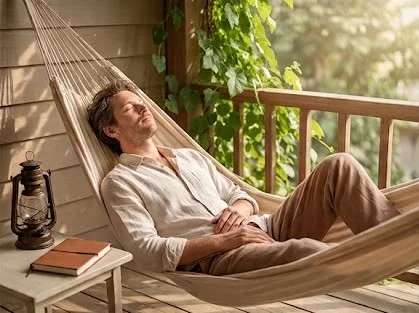
You finally have an open afternoon. No meetings, no errands, no one asking anything of you. And instead of relaxing, you feel restless. Guilty, almost. Some part of you starts hunting for something to do — laundry, emails, a “productive” hobby — just to justify sitting still.
If that sounds familiar, you’re not alone. Somewhere along the way, many of us absorbed the idea that rest has to be earned. That doing nothing is a character flaw. That’s not true, and the belief is quietly costing you more than you realize.
Also Read: Slow Morning Building a Life that Does not Start in Panic
I know this feeling well. Not long ago, I believed in sacrifice: the more effort I poured in, the better the result would be. I rarely slept more than four hours a night, and I was so used to it that I never noticed how much it was hurting my health and my work during the day. Sitting idle, or simply enjoying nature, made me feel irresponsible, as if I were wasting time I didn’t have. Slowly, I learned that good results come from the quality of my work, not from how many hours I burn through. For the past month I have been sleeping properly and I have noticed an increase in amount and quality of my work. I also realized I was not alone. Many people carry this same guilt, and that is why I wrote this article.
The Problem: Rest Feels Like a Moral Failure
For a lot of people, relaxing without a “reason” triggers real discomfort. Watching TV feels fine after a hard day at work, but sitting on the porch doing absolutely nothing? That can feel indulgent, even shameful.
This isn’t a personal quirk. It’s cultural conditioning. Productivity gets treated as a stand-in for worth. Busy schedules get worn like badges of honor. Meanwhile, unstructured time gets framed as wasted time, something to apologize for.
The result is a strange kind of exhaustion: physically not doing much, but mentally never fully at ease. Rest becomes something to sneak in, not something to protect.
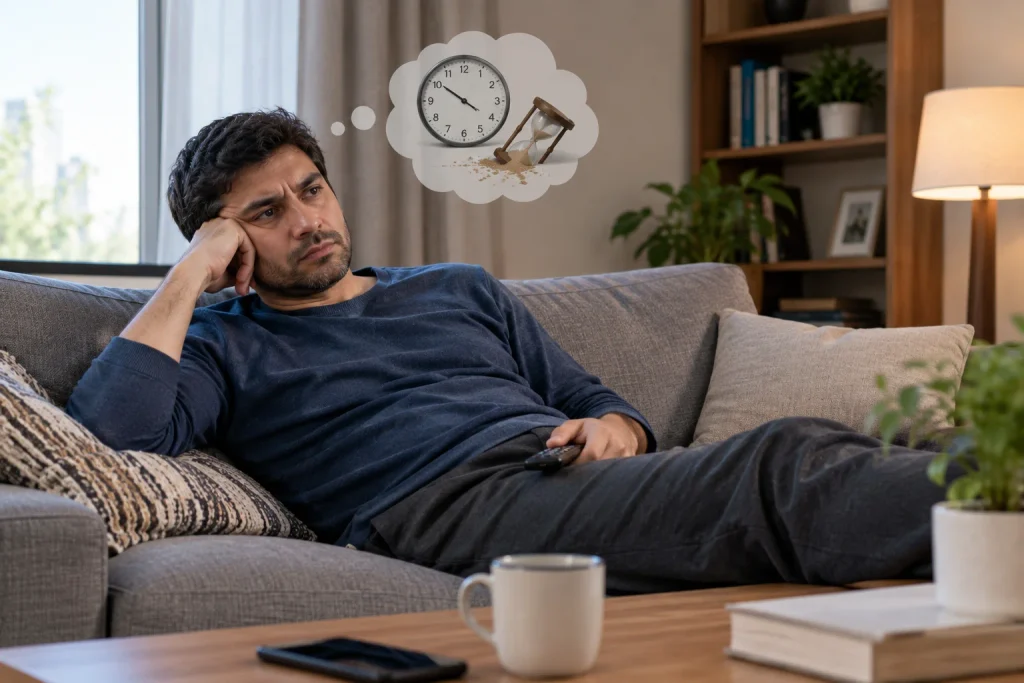
Why Purposeless Rest Feels Threatening
Constant activity gives structure and a sense of control. When you’re doing something — anything — you at least know you’re moving forward. Stillness removes that scaffolding.
Without a task to hide behind, thoughts and feelings you’ve been outrunning tend to surface. Boredom shows up. So does restlessness, or a vague sense that something is missing. It’s uncomfortable, so the instinct is to fill the space immediately, often with more work.
There’s also the comparison trap. Everyone around you seems to be hustling, optimizing, building something. Rest can start to feel like falling behind, even when there’s no actual race happening.
Why This Quietly Backfires
The irony is that treating rest as laziness usually makes people *less* effective, not more.
**Burnout builds slowly.** Constant low-grade guilt about resting means rest rarely feels complete. The body might stop moving, but the mind doesn’t fully switch off, so recovery never really finishes.
**Creativity needs empty space.** Some of the best ideas surface exactly when nothing structured is happening — during a walk, in the shower, staring out a window. Fill every gap with tasks, and there’s no room left for those moments to occur.
**Decision-making suffers.** A tired, wound-up mind makes worse choices. Rest isn’t separate from performance; it’s part of what makes good performance possible. In my own experience, once I started resting properly, I needed fewer hours and my work came out better.
**Relationships get thinner.** Constant busyness leaves less bandwidth for the people around you. Presence requires some slack in the system — always being “on” doesn’t leave much of that.
Rest treated as an afterthought stops functioning as rest at all. It becomes just another task squeezed in around everything else, instead of something that actually replenishes you.
The Shift: Rest as Maintenance, Not a Reward
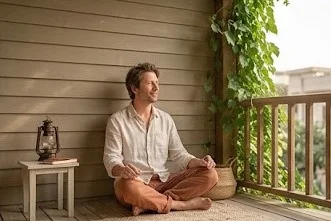
Reframing helps more than willpower does here. Instead of viewing rest as something to earn after enough output, try viewing it as basic maintenance — the same category as sleep, food, or exercise.
No one feels guilty about needing sleep. It’s simply understood as necessary. Unstructured rest deserves the same status, not because it’s been “earned,” but because minds and bodies need downtime to keep functioning well.
This doesn’t mean every moment of rest needs a lofty justification either. Rest doesn’t need to be productive to count as legitimate. It doesn’t have to lead to a breakthrough idea or a burst of energy afterward to be worthwhile. Sometimes doing nothing is valuable simply because it’s what a person needs at that moment.
Small Ways to Practice Doing Nothing on Purpose
Start with short stretches
Five or ten minutes of intentionally not filling time can feel surprisingly hard at first. Sit outside, look out a window, or simply stay still without reaching for a phone. Building tolerance for stillness happens gradually.

Notice the urge to fill the space
When the instinct to “do something” shows up, pause before acting on it. Ask whether the task is actually necessary right now, or whether it’s really just discomfort looking for an outlet.
Separate rest from reward
Try not tying rest to finishing a to-do list first. Waiting for “enough” productivity before allowing rest usually means rest never quite arrives, since there’s always something left undone.
Let boredom exist for a bit
Boredom isn’t dangerous — it’s often just the mind readjusting to less stimulation. Sitting with it, rather than immediately reaching for a phone or a task, tends to pass more quickly than expected.
Protect small pockets of unstructured time
A short walk without headphones, a quiet cup of coffee before checking messages, or a few minutes of just sitting after a task ends before starting the next one — small pockets add up.
What Rest Actually Restores
Rest done well doesn’t just recharge energy for the next task. It restores perspective. Away from constant input and output, it becomes easier to notice what actually matters versus what’s simply been filling time out of habit.
It also restores a basic sense of okay-ness — the quiet reassurance that a person’s worth isn’t dependent on constant output. That’s not laziness. That’s simply being human, with limits that need honoring rather than overriding.
Moving Forward
Rest isn’t the opposite of a meaningful life — it’s part of what makes one sustainable. Treating stillness as something to defend, not something to apologize for, changes the relationship with rest entirely.
Doing nothing on purpose isn’t giving up on productivity. It’s recognizing that a mind and body given real room to recover will function better than one running on empty, dragging guilt along the whole way.
The next open afternoon that shows up doesn’t need to be filled. It can just be rested in — no justification required.
Related Posts








Pingback: Solitude vs. Loneliness: Why They’re Not the Same Thing – the calm living
Pingback: Listening to the Body: Decoding Unconscious Physical Tension – the calm living