
Have you ever walked into a room stacked with clutter, unpacked boxes, or crowded shelves and felt a sudden, inexplicable sense of fatigue? You had not performed any physical labor, nor had you engaged in an exhausting mental exercise. Yet, your energy dipped, your focus scattered, and a subtle weight settled onto your chest.
Also Read: The Quiet Power of Minimalism: Living More with Less
We often evaluate our possessions by their monetary cost at the moment of purchase. We look at a price tag, determine whether we can afford it, swipe a card, and bring the item home. What we rarely calculate, however, is the hidden, recurring tax that every physical object extracts from our lives long after the transaction is complete.
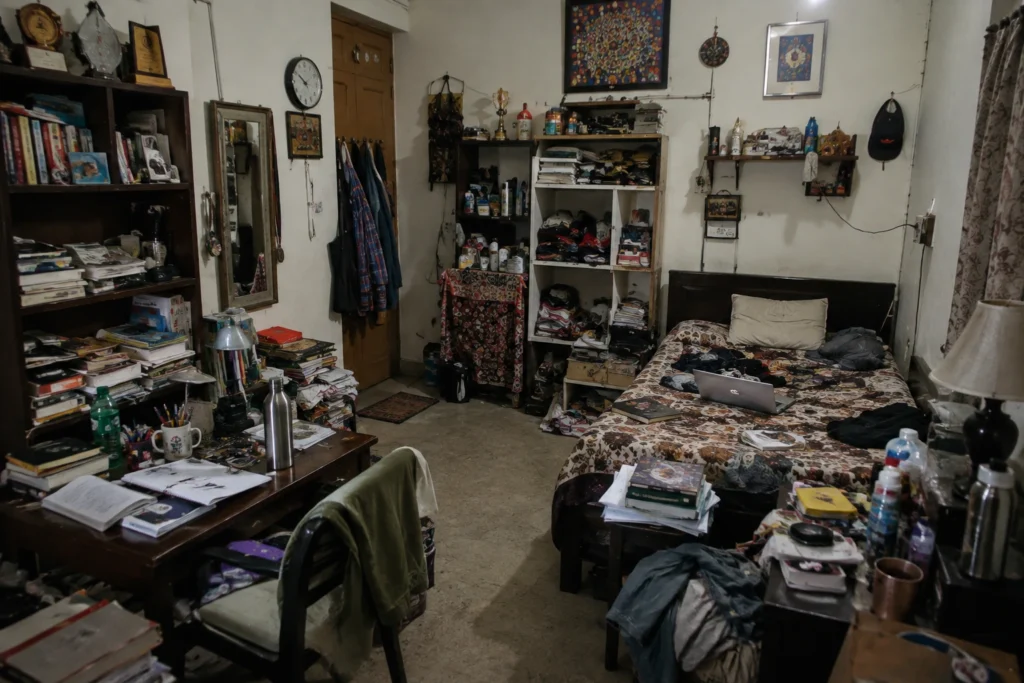
Every object you bring across your threshold demands a fraction of your life force. It requires space, attention, maintenance, cleaning, organization, protection, and eventually, disposal. When you multiply that demand across hundreds or thousands of accumulated items, the total sum is a staggering, silent drain on your daily energy, peace of mind, and mental clarity.
The Hidden Psychology of Physical Objects
To understand why possessions drain our energy, we must examine how the human mind interacts with the physical environment. The brain is continuously processing environmental cues, even when we are not consciously paying attention to them.
Every physical object in your immediate environment acts as a visual and cognitive prompt. A stack of unread books on a nightstand whispers, “You haven’t read us yet.” A closet jammed with unworn clothes subtly reminds you of past financial missteps or an abandoned lifestyle. An unmaintained tool in the garage signals a task left undone.
Psychologists refer to this phenomenon as environmental load. When your surrounding space is saturated with objects, your brain is forced to spend continuous micro-amounts of processing power just to filter out the visual noise. You may believe you are ignoring the clutter on your desk or the overstuffed drawers in your hallway, but your subconscious mind is working overtime to navigate around them. This constant baseline stimulation keeps your nervous system in a state of low-grade alert, leading to chronic mental fatigue.
The Four Silent Energy Taxes of Ownership
When we purchase an item, we pay for it with money. But once it belongs to us, we continue to pay for it using three vital personal currencies: Time, Attention, and Space.
                   +-----------------------------+
                   |  THE BURDEN OF OWNERSHIP    |
                   +--------------+--------------+
                                  |
         +------------------------+------------------------+
         |                        |                        |
         v                        v                        v
+-----------------+      +-----------------+      +-----------------+
|  Space & Scope  |      | Care & Friction |      | Guilt & Loss    |
|   (Financial)   |      |   (Attention)   |      |   (Emotional)   |
+-----------------+      +-----------------+      +-----------------+
1. The Space Tax
Physical items occupy geographic real estate. As possessions multiply, living spaces shrink. Rooms designed for relaxation, creative thought, or family connection gradually transform into storage facilities. When living spaces become tight, people often feel compelled to buy larger homes, rent external storage units, or invest in elaborate organizational systems. You end up spending more money and working longer hours simply to house items that you rarely, if ever, use.
2. The Maintenance and Cleaning Tax
Objects do not remain pristine on their own. They collect dust, rust, degrade, break down, or require updating.
- Furniture must be wiped down and rearranged.
- Clothes must be washed, folded, ironed, and repaired.
- Electronics demand updates, cables, chargers, and troubleshooting.
- Vehicles need servicing, washes, and insurance tracking.
The more you own, the more your weekends and free hours transform into maintenance shifts. Instead of resting, engaging in creative work, or spending unhurried time with loved ones, you find yourself managing, cleaning, and sorting your belongings.

3. The Decision Fatigue Tax
Every object introduces potential decisions. What should I wear today? Where should I store this extra pan? How do I organize these papers? Where did I leave the instruction manual?
The human brain possesses a limited supply of decision-making energy each day. When your environment contains an overwhelming array of choices, options, and misplaced items, you burn through your daily reservoir of decision-making capacity before lunch. By evening, you feel completely drained, not because you solved complex problems, but because you spent all day making micro-decisions about physical items.
4. The Emotional and Identity Tax
Perhaps the heaviest tax imposed by physical possessions is psychological. Objects frequently carry emotional attachment, guilt, and lingering identity constructs:
- The “Someday” Items: Equipment for hobbies you no longer practice, or clothes that no longer fit, keeping you anchored to a past identity or a fictional future self.
- The Guilt Purchases: Expensive items bought on impulse that you don’t use, sitting in plain sight as a constant reminder of wasted resources.
- The Obligation Relics: Gifts or heirlooms you dislike but feel morally obligated to keep out of fear of disrespecting the giver.
These items silently project obligation, regret, and disappointment into your living space, eroding your sense of contentment in the present moment.
Moving from Accumulation to Intentionality
Lightening the burden of ownership does not require adopting an extreme, sterile lifestyle where you sleep on a bare floor and own only a bowl and a spoon. Minimalism is not about deprivation; it is about reclaiming your life force. It is the intentional choice to surrounding yourself only with items that serve a clear utility or bring genuine, unforced delight.
Here is how you can begin shifting your relationship with physical possessions to restore your daily energy:
Step 1: Shift Your Mindset at the Point of Entry
The most effective way to reduce the burden of ownership is to prevent unnecessary items from entering your life in the first place. Before purchasing or accepting any physical item, pause and conduct a realistic Lifetime Cost Assessment.
Ask yourself the following neutral questions:
- Where will this item live in my home?
- How often will I need to clean, maintain, or repair it?
- Am I willing to trade my future free time to maintain this object?
- Am I buying this for my actual daily life, or for an idealized version of myself?
By viewing purchases through the lens of ongoing maintenance rather than instant gratification, the appeal of impulsive acquisition naturally fades.
Step 2: Practice “Somatic Auditing” During Decluttering
When evaluating existing possessions, traditional advice often focuses on logic or future usefulness. Instead, try utilizing somatic awareness—paying attention to the physical sensations in your body as you hold or interact with an item.
- Pick up an object in your home.
- Hold it, look at it, and observe your immediate body response.
- Do your shoulders tense up? Do you feel a subtle tightness in your chest, a wave of guilt, or a dip in energy? (This indicates an energy drain).
- Or do you feel a sense of lightness, clear utility, or simple ease?
Your body often recognizes the psychological weight of an item long before your rational mind finishes coming up with excuses to keep it. If an item causes a subtle feeling of heaviness or tension, it is claiming more energy than it provides.
Step 3: Categorize Possessions by Energy Impact
To simplify the decluttering process, organize your belongings into four distinct categories based on their energy impact:
| Category | Description | Recommended Action |
| 1. Energy Anchors | Items used daily that function well and make life smoother (e.g., comfortable shoes, reliable kitchen tools, favorite desk lamp). | Keep with gratitude. Maintain them well and give them designated homes. |
| 2. Silent Taxes | Functional items that are broken, redundant, or overly complex to maintain. | Simplify or repair. Fix them immediately or replace them with simpler alternatives. |
| 3. Emotional Ghost Items | Belongings kept purely out of past guilt, obligation, or abandoned future aspirations. | Release gently. Donate them so someone else can find actual utility in them. |
| 4. Visual Static | Unorganized papers, random knick-knacks, and duplicate items lingering on flat surfaces. | Clear systematically. Consolidate, digitize, or rehome. |
Step 4: Create “Resting Zones” in Your Home
Our minds need physical spaces where attention can rest without being pulled in multiple directions. Designate at least one area in your living space as a Zero-Clutter Zone.

This could be your bed and nightstand, a reading chair, or your primary desk surface. Keep this specific zone entirely free of unsorted mail, extra objects, wires, or temporary storage items. When your eyes land on this surface, there are no tasks, reminders, or maintenance cues to process. Over time, this designated area becomes a visual sanctuary where your nervous system can quickly settle into a calm state.
The Unexpected Freedom of Unburdening
When you systematically reduce the volume of physical items in your space, a profound shift occurs in your daily experience:
- Time Expands: Cleaning and organizing take a fraction of the time, leaving hours of uninterrupted space for rest, hobbies, and meaningful connection.
- Focus Sharpens: Without constant visual distractions competing for your subconscious attention, deep work and creative thinking become effortless.
- Financial Ease Deepens: You stop spending money on storage solutions, maintenance, and impulse buys, building a cushion of true financial peace.
- Inner Quiet Returns: The subtle, background hum of unfinished tasks quietens down. Your home transforms from a demanding work environment into a genuine sanctuary.
Living Lighter in a Heavy World
We live in a culture that continuously insists that peace, success, and contentment are found by adding more: more gadgets, more clothing, more home décor, more tools. But true calm is rarely achieved through addition. It is uncovered through thoughtful subtraction.
Your attention, energy, and time are finite, precious resources. They belong to your life, your creative pursuits, your inner inquiry, and your relationships. Do not allow them to be silently siphoned away by forgotten objects sitting on shelves or crammed inside dark closets.
Take a gentle look around your room right now. Pick one surface, one drawer, or one corner. Ask yourself what is silently claiming your energy, and give yourself permission to let it go. In releasing the physical burden of ownership, you make room for something far more valuable: space to breathe, space to think, and the freedom to simply be present.
Related Articles
- Financial Minimalism: How to Escape Money Anxiety and Build True Freedom
- Digital Minimalism: Reclaiming Your Attention in a Noisy World
- Slow Mornings: Building a Life That Doesn’t Start in Panic








Pingback: Financial Contentment: Moving Beyond the Impulse to Continually Upgrade – the calm living