
Two States That Feel Deceptively Similar
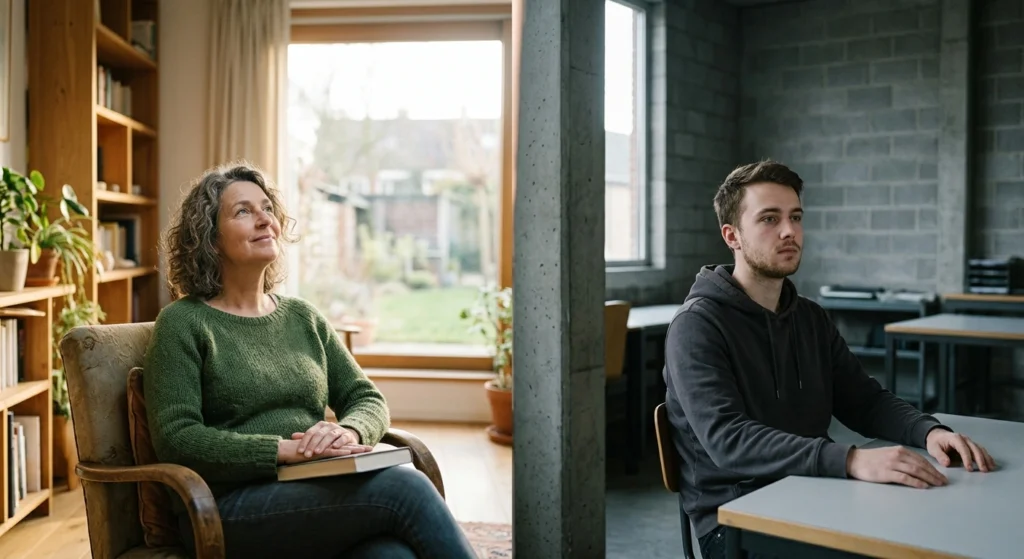
If someone asked you right now, “Are you at peace, or are you just numb?” — could you answer with certainty?
Many people can’t. That’s because numbness and peace can feel remarkably alike from the inside. Both involve a kind of stillness. Both create distance from intense emotion. Both can look, from the outside, like calm.
But underneath that surface stillness, these two states are worlds apart — and confusing one for the other can quietly cost you years of your emotional life.
Also Read: Transforming Suffering: How the Vow of Non Harming Restores Inner Peace
What Peace Actually Feels Like
Genuine peace is not the absence of feeling. It’s the presence of a stable, grounded relationship with whatever you’re feeling.
When you’re at peace, you can feel sadness without being consumed by it. You can feel joy without needing to grip onto it. Emotions move through you — they arrive, they’re acknowledged, and they pass, the way weather moves through a landscape.

Peace is spacious. It includes the full range of human emotion, held with a sense of steadiness rather than being shut out.
What Numbness Actually Feels Like
Numbness, on the other hand, is a shutdown. It’s what happens when feeling has become too overwhelming, too unsafe, or too exhausting — so the mind quietly turns the volume down on all of it, not just the painful parts.
This is often the nervous system’s way of protecting you after prolonged stress, unresolved pain, or emotional overload. It’s not weakness or failure — it’s a survival response.
The problem is that numbness doesn’t selectively block out just the bad feelings. When you shut down pain, you often shut down joy, connection, and aliveness right along with it.

The Key Difference: What’s Happening Underneath
Here is the clearest way to tell the two apart: peace is emotionally full, while numbness is emotionally empty.
Peace says: “I feel this, and I can hold it without falling apart.”
Numbness says: “I don’t feel much of anything, and that’s easier than feeling too much.”
Peace is an active, engaged relationship with your inner world. Numbness is a disconnection from it.
Signs You Might Be Numb, Not at Peace
Numbness can be sneaky, especially because it often gets mistaken for maturity or emotional control. Some signs worth paying attention to:
- Things that used to bring you joy no longer feel like much of anything
- You feel disconnected from your own body, or like you’re watching your life from a slight distance
- You rarely cry, even in situations that would normally call for it
- You have a hard time answering “How do you feel?” with anything beyond “fine” or “okay”
- You feel a persistent sense of flatness, even during good moments
- Difficult emotions from the past feel oddly distant or unreal, as if they happened to someone else

If several of these resonate, what looks like calm on the surface may actually be your nervous system’s way of managing more than it can currently process.
Why We Often Choose Numbness Without Realizing It
Nobody consciously decides to feel nothing. Numbness usually develops gradually, as a response to pain that felt too big to face directly.
Maybe a loss was too devastating to fully grieve at the time. Maybe expressing emotion wasn’t safe or welcomed growing up. Maybe you’ve simply been under sustained stress for so long that shutting down became the path of least resistance.
In the short term, numbness works. It creates distance from pain. But left unaddressed, that same distance quietly separates you from everything else — meaning, connection, and the felt sense of being fully alive.
How to Move From Numbness Toward Genuine Peace
Reconnecting with feeling after a period of numbness takes patience. It’s not something to rush, but it is something you can gently work toward.
Start by naming what you notice — even if it’s “nothing.” If numbness is present, acknowledging it honestly (“I feel pretty flat right now”) is more useful than pretending you feel calm when you don’t.
Reintroduce small doses of sensation. Numbness often affects the body as much as the mind. Gentle movement, time in nature, or simply noticing physical sensations (the temperature of the air, the weight of your body in a chair) can help rebuild the connection between mind and body.
Let feelings arrive without immediately analyzing them. When an emotion does surface, try just noticing it — “there’s sadness here” — without rushing to explain, fix, or judge it.
Be patient with the process. If numbness developed over months or years as a protective response, it won’t dissolve overnight. Small, consistent moments of reconnection matter more than one big breakthrough.
Consider support if numbness feels persistent. Long-standing emotional numbness, especially following significant stress or loss, is something a therapist can help you work through safely and at a manageable pace.

Real Peace Has Room for Everything
True peace was never about feeling nothing. It’s about feeling everything, and trusting that you can hold it.
Numbness might look like peace from a distance, but it comes at a cost — a quieter life, a duller joy, a muted connection to the very experiences that make life feel worth living.
Reconnecting with feeling can be uncomfortable at first. But on the other side of that discomfort is something numbness could never offer: a life that feels genuinely, fully your own.
Title/Header Image Prompt: A person standing at the edge of a calm lake at early morning, wrapped in a soft blanket, gazing out at still water with gentle mist rising. Their expression is contemplative and quiet — neither happy nor sad, just present. Soft pastel dawn light — pale blues, muted pinks. Serene, meditative, photorealistic style. No text, no logos.
Related Posts
- Rumination vs. Reflection: Why One Heals and the Other Hurts
- Doing Nothing on Purpose: Why Rest Isn’t Laziness
- Meditation for Beginners and Committed Meditators
- Self Remembering: Deepening Presence








Pingback: Solitude vs. Loneliness: Why They’re Not the Same Thing – the calm living
Pingback: Overthinking vs. Problem-Solving – the calm living